We were mid-discussion in our AMA Chicago book club, unpacking Supercommunicators by Charles Duhigg, when the conversation shifted — as the best ones do.
Someone asked: how do you actually create an environment where tough conversations can happen?
My honest answer: it takes intentionality, sustained movement, and a willingness to treat organizational culture as a strategic discipline, not a feel-good initiative.
If you want to be truly transformational within your organization, you have to build the muscles for it. That means investing in how you think, how you listen, how you lead across difference, and how you measure what actually matters.
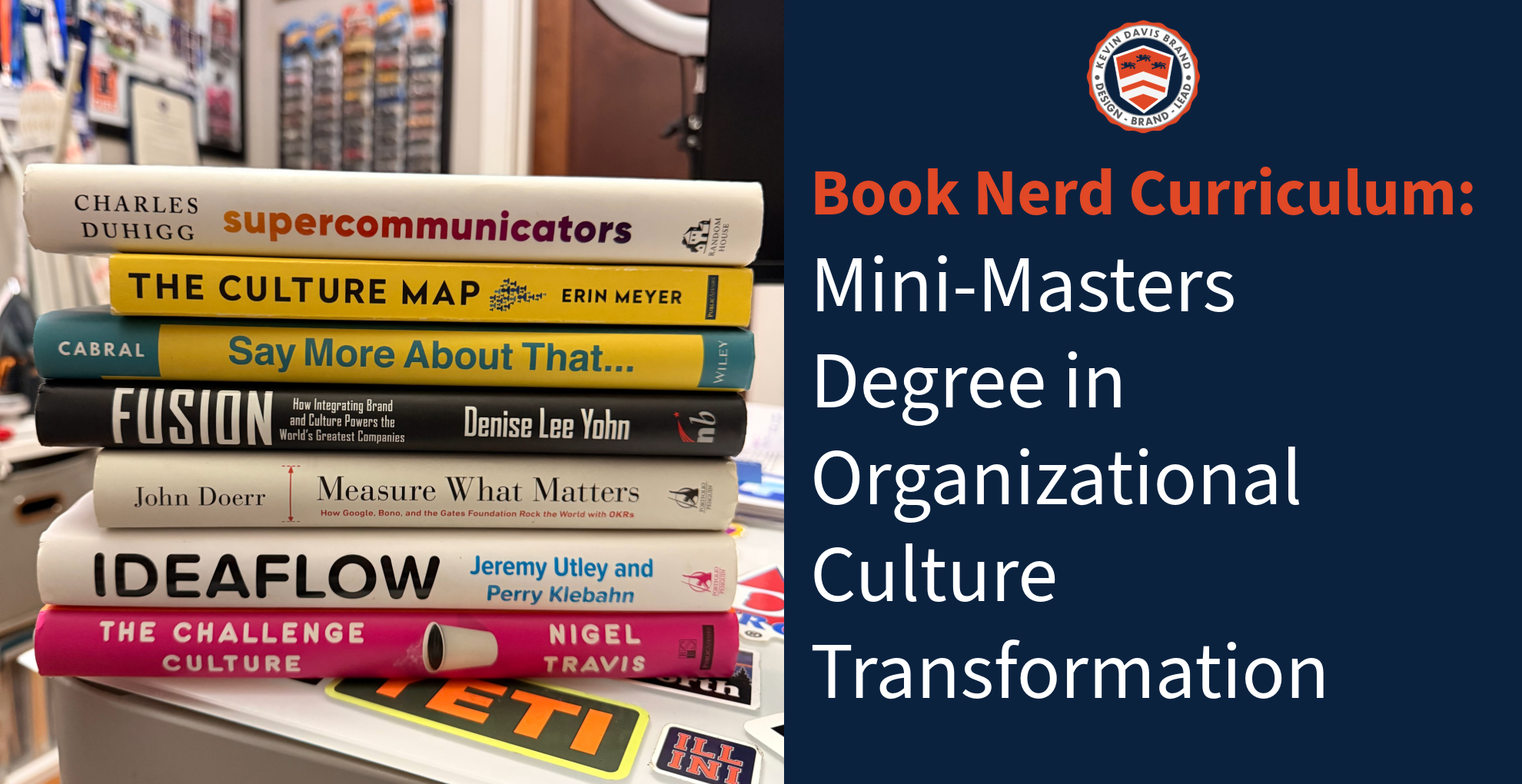
So I shared a mini masters curriculum in organizational culture transformation. No particular order. All essential.
Fusion: How Integrating Brand and Culture Powers the World's Greatest Companies by Denise Yohn Here's why: Most leaders treat brand and culture as separate workstreams. Yohn dismantles that. If you want transformation to stick, it has to live inside the organization first. Your people are your brand.
Say More About That… by Amber Cabral Here's why: Advocacy without skill is just noise. Cabral gives you the language and the framework to speak up in rooms where pushback isn't always welcome, and to help others find their voice too.
Supercommunicators by Charles Duhigg Here's why: Most of us think we're communicating. Duhigg shows us we're often just talking past each other. Understanding which kind of conversation you're actually in changes everything about how you lead.
The Culture Map by Erin Meyer Here's why: You cannot lead across difference, cultural, generational, or organizational, without a framework for decoding it. Meyer gives you the map most leaders never knew they were missing.
Measure What Matters by John Doerr Here's why: Transformation without accountability is aspiration. OKRs create the shared language of progress that keeps teams aligned when the work gets hard and the vision gets fuzzy.
IdeaFlow by Jeremy Utley and Perry Klebahn Here's why: Innovation isn't a personality trait. It's a practice. Utley and Klebahn make the case that the organizations winning right now are the ones treating idea generation as infrastructure, not inspiration.
The Challenge Culture by Nigel Travis Here's why: Psychological safety sounds good in theory. Travis shows what it actually takes to build an organization where pushback is expected, respected, and productive, not performative.
Seven books. One through line: transformation is relational before it is operational.
Which of these is already on your shelf, and which one do you need to pick up?